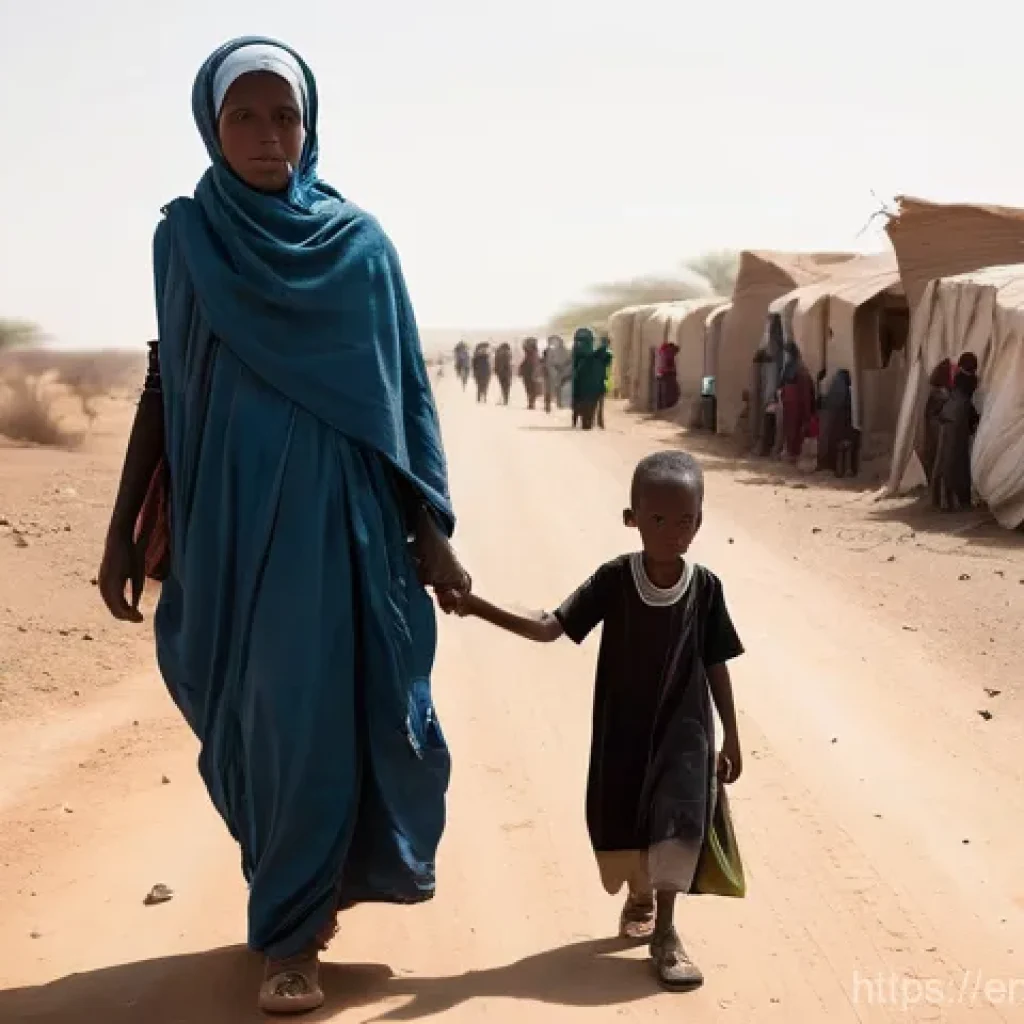
Hey there, wonderful readers! You know, as someone who keeps a close eye on global events and humanitarian issues, there’s one situation right now that truly weighs on my heart and demands our attention: the evolving crisis along the Chad-Sudan border.
It’s not just a geopolitical headline; it’s a profound human story unfolding every single day. From what I’ve been observing, the ongoing conflict in Sudan, which tragically ignited in April 2023, has unleashed an unprecedented wave of displacement, pushing over a million desperate souls – mostly women and children – across the border into neighboring Chad.
Can you even imagine fleeing your home with nothing but the clothes on your back, seeking refuge in a country already struggling with its own challenges?
I certainly can’t, not really, but I feel the immense weight of it. Chad, despite its own poverty, has opened its doors, but the sheer scale of this influx is straining every single resource, leading to overcrowded camps, severe malnutrition, and a heartbreaking lack of basic necessities.
What’s really concerning, looking ahead, is how these immense pressures are intensifying long-standing tensions, both diplomatically between the two nations and within the communities themselves.
We’re seeing a complex web of accusations regarding external support for warring factions, rising security risks, and a humanitarian response that is alarmingly underfunded.
It’s a crisis that’s far from over, and its ripple effects are only just beginning to be fully understood across the region and beyond. This isn’t just a regional issue anymore; it’s a global call for compassion and action.
So, if you’re like me and want to truly grasp the gravity of what’s happening and what might come next, stick around. Let’s unravel the intricate layers of this critical situation together.
The Unfolding Human Tide: A Journey of Desperation
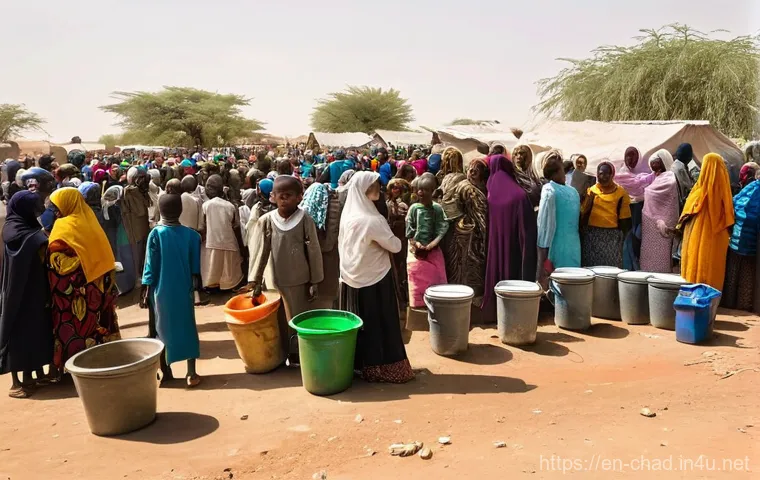
Hey friends, let’s really get into the heart of this. When I think about the sheer volume of people who have been forced to flee their homes, it’s just staggering, isn’t it?
Since April 2023, the conflict in Sudan has pushed an unimaginable number of souls – over 844,000 Sudanese refugees, to be precise – across the border into Chad.
And that’s on top of the hundreds of thousands of Sudanese refugees who were already there from previous conflicts, some dating back to 2003. We’re talking about a country that now hosts over 1.2 million forcibly displaced people, a number that just keeps climbing.
Can you imagine, almost one in every seventeen people in Chad is now a refugee? My heart absolutely aches thinking about it. These aren’t just statistics; these are families, individuals, often women and children, making up the vast majority, as much as 9 out of 10 arrivals.
They arrive with nothing but the clothes on their backs, carrying the visible and invisible scars of violence, forced recruitment, and the heart-wrenching separation from loved ones.
I’ve seen some of their stories, and it’s just impossible not to feel the weight of their journey. They’ve walked for days, under the scorching sun, through unimaginable dangers, just to find a sliver of safety.
Fleeing the Unimaginable: The Journey to Chad
Picture this: you’re living your life, perhaps studying at university like Didja, or selling produce from your family farm, and then, in an instant, everything changes.
The fighting erupts, and you have to make an impossible choice: stay and face untold horrors, or flee with nothing. Many, like Didja, recount escaping under fire, navigating armed checkpoints where extortion and strict restrictions are commonplace.
Over 70% of recently interviewed refugees have reported experiencing serious human rights violations, from physical and sexual violence to arbitrary detention.
And for 60% of them, the journey has meant being separated from their family members – a cruel reality that compounds their trauma. I can’t even begin to fathom the courage it takes to endure such a trek, knowing you might never see your loved ones again.
Many arrive utterly exhausted, dehydrated, having gone days without food or water. The imagery of thick smoke billowing from burning homes, as witnessed by UNHCR staff near the border, paints a vivid picture of the destruction they leave behind.
It’s a stark reminder that this isn’t just about escaping conflict; it’s about fleeing total devastation.
Overwhelming the Welcome: Camps and Settlements
When I hear about places like Adré, a town that suddenly finds itself hosting over 207,000 refugees, more than four times its usual population, it really puts things into perspective.
The landscape transforms overnight, dotted with makeshift shelters and tents, struggling to hold the sheer number of new arrivals. Chad’s government has truly done an admirable job, keeping its borders open and even establishing seven new settlements, each designed for around 50,000 people, and expanding ten existing ones.
They’ve even implemented an asylum law offering access to land, freedom of movement, and identity cards, which is honestly incredible given their own struggles.
However, the reality on the ground is that even with these efforts, the existing services are completely overwhelmed. The sudden influx of people, especially in eastern Chad, which was already facing extreme poverty and ethnic tensions, has exacerbated every single challenge you can imagine.
It’s a testament to human resilience, but also a stark indicator of the desperate need for more support.
A Staggering Humanitarian Lifeline: Surviving on the Edge
It’s one thing to hear about a crisis, and another to truly understand the day-to-day struggle for survival. What I’ve learned about the situation for these refugees in Chad is just heartbreaking.
The basic needs that we often take for granted – food, clean water, shelter, and medical care – are luxuries for many. We’re talking about a dire lack of humanitarian funding that has left hundreds of thousands facing hunger in the coming months.
The World Food Programme warned that in 2023, they had no funding for refugees and displaced people from May onwards, forcing them to reduce aid. Imagine receiving only five liters of water per person per day; that’s far, far below the international standard of 15-20 liters.
And shelter? Only 14% of the needs have been met. It’s a constant, terrifying battle against the elements and against sheer deprivation.
I personally cannot imagine living each day wondering if there will be enough to eat, if I’ll find clean water, or if I’ll have a roof over my head.
Battling Hunger and Malnutrition
The specter of hunger is a terrifying reality for so many. The disruption of cross-border trade with Sudan has caused food prices in eastern Chad to more than double, making even basic staples unaffordable for many.
It’s not just the refugees; host communities are also grappling with rising food insecurity. Reports indicate that 28% of children under five screened in the Adré area were acutely malnourished.
More broadly, one-fifth of all young children arriving from Sudan are experiencing acute malnourishment, a life-threatening condition. The World Food Programme estimates that during the lean season, an estimated 3.4 million Chadians and refugees are projected to face severe food insecurity.
I truly believe this is one of the most urgent issues, because without food, there’s no hope for anything else. Teams are doing their best to provide nutrition support, but the scale of the need is simply overwhelming.
Health Crisis on the Brink
If I had to describe the health situation, I’d say it’s teetering on a breaking point. Health centers along the border, like those in Birak and Mile Extension, are completely overwhelmed.
There are frequent shortages of essential medicines, and specialized services, such as mental health support or reproductive health, are largely unavailable.
This is a huge concern, especially considering the immense trauma many refugees have endured. Can you imagine going through what they have and then not having access to psychological support?
Acute respiratory infections, watery diarrhea, and malaria are the most common illnesses, and there’s an ongoing outbreak of hepatitis E among refugees, as well as cholera outbreaks.
The IRC has deployed mobile clinics to provide basic health services, including malnutrition support and care for gender-based violence, but the needs are just escalating daily.
It’s truly a race against time and disease.
Chad’s Burden: A Nation Strained to its Limits
Let’s be real for a moment. Chad is already one of the poorest countries in the world, with a staggering 42% of its population living below the poverty line.
Now, imagine this nation, grappling with its own immense development challenges like climate shocks and chronic food insecurity, suddenly becoming a sanctuary for over a million refugees.
It’s an immense, almost impossible burden to shoulder. The influx has placed unimaginable pressure on everything – land, water, social services, and the local economy.
I’ve heard stories from aid workers describing brawls among aid beneficiaries, and heartbreaking conflicts between refugees and locals over dwindling resources.
It’s a tension you can feel, a constant struggle for survival that affects everyone. The disruption of cross-border trade with Sudan has sent food prices skyrocketing, further destabilizing an already fragile economic environment.
Economic Ripples and Resource Strain
When I think about the economic fallout, it’s not just about what the refugees lack; it’s also about the profound impact on the Chadian people. The disruption of supply chains from Sudan has caused staple food prices in eastern Chad to more than double since the conflict began.
For communities already struggling, this inflationary pressure is crushing. A bag of millet that once cost about $19.50 USD now goes for $65 USD. This isn’t just an inconvenience; it can mean the difference between eating and starving for many families.
Beyond prices, the sheer presence of so many people puts an incredible strain on shared resources. Water, land for agriculture, and even firewood become scarcer.
I’ve personally seen how these pressures can ignite resentments, as host communities feel their own vulnerabilities escalate while international attention often focuses solely on the displaced.
This isn’t just about charity; it’s about sustaining an entire region.
Pressures on Public Services and Infrastructure
The scale of this displacement means that every single public service, already stretched thin in Chad, is now under immense pressure. Schools, health clinics, water points, and sanitation facilities are simply not designed to accommodate such a rapid, massive increase in population.
In towns like Adré, basic services have been completely overwhelmed. The Chadian government has been swift in its response, setting up new settlements and expanding existing ones, but the infrastructure simply can’t keep pace.
This means that even with the best intentions, the quality of services inevitably declines, impacting both the refugees and the host communities. I’ve always believed that a strong infrastructure is the backbone of any society, and when that backbone is breaking under the weight of a crisis, the humanitarian consequences multiply.
It’s a reminder that even the most welcoming nation has its limits without substantial, sustained international assistance.
| Challenge | Impact on Refugees & Host Communities | Current Status / Need |
|---|---|---|
| Food Insecurity | 3.4 million people acutely food insecure; food prices more than doubled; severe child malnutrition. | WFP needs $142.7M urgently to prevent food assistance halt. |
| Water Access | Refugees receive 5 liters/person/day; international standard is 15-20 liters. | Severe shortages lead to dehydration and illness. |
| Shelter | Only 14% of shelter needs met; overcrowded makeshift camps. | Thousands sleep in the open or under inadequate covers. |
| Healthcare | Overwhelmed health centers; shortages of medicines; lack of mental health/reproductive services. | High rates of malaria, diarrhea, malnutrition, and infectious diseases. |
| Protection | 70% of refugees report human rights violations (violence, arbitrary detention, forced recruitment); family separation. | Urgent need for child protection and gender-based violence support. |
Beyond Borders: Rising Tensions and Regional Ripples
You know, crises rarely stay neatly within one country’s lines on a map, and the Sudan conflict is a textbook example of that. What started as an internal struggle has undeniably sent ripple effects across the entire region, and particularly into Chad.
I’ve been following the reports, and the security situation along the border is something that genuinely keeps me up at night. There’s a real risk of the conflict spilling over, and we’ve already seen worrying signs of that.
This isn’t just about humanitarian needs anymore; it’s about the broader stability of an already volatile region.
Security Risks and Cross-Border Incidents
The border between Chad and Sudan has always been somewhat porous, but now it’s become a conduit for immense risk. We’re seeing security concerns growing, with reports of increased cross-border raids and violence.
Even historically, Sudanese Arab militia have launched raids on refugee and Chadian communities. Today, the Sudanese Armed Forces (SAF) have even explicitly threatened Chad, accusing its airports of being legitimate targets and alleging that Chad is providing external support to the rival Rapid Support Forces (RSF).
While Chad denies these allegations, the Chadian Foreign Affairs Ministry has declared its readiness to retaliate, escalating an already tense situation.
My personal take is that such accusations, whether true or not, can easily ignite further conflict and endanger even more innocent lives. The presence of armed groups and the free flow of weapons make this border a very dangerous place for everyone.
Geopolitical Shadows and Diplomatic Strain
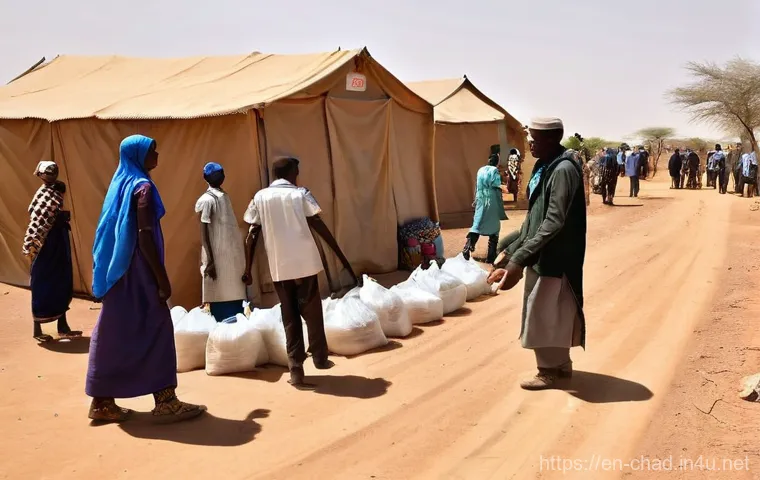
Beyond the immediate security threats, there’s a complex web of geopolitical tensions at play. The Sudan conflict has put immense strain on diplomatic relations between Chad and Sudan, and even brought in other regional and international actors.
A 2024 UN Security Council report confirmed Chad’s involvement in supporting the RSF, despite Chad’s denials. This kind of proxy engagement, even if unacknowledged, can have devastating long-term consequences.
Both Chad and Sudan have a history of fraught relations and proxy wars, and this current crisis threatens to reignite those old wounds. It’s a delicate dance of international relations, where every accusation and every alleged action can tilt the balance towards further instability.
I truly believe that without concerted diplomatic efforts and a clear commitment to neutrality from all regional players, this crisis could spiral into a much larger, more intractable conflict.
The Silent Struggle for Aid: Underfunded and Overwhelmed
You know, it often feels like the world moves on so quickly from one crisis to the next, leaving ongoing emergencies to fade from the headlines. The humanitarian response to the Chad-Sudan crisis is a prime example.
Despite the heroic efforts of aid organizations on the ground, the reality is stark: the response is severely, dangerously underfunded. It’s a silent struggle that means real people aren’t getting the help they desperately need, and that, to me, is unacceptable.
I’ve seen the numbers, and they’re alarming.
Chronic Underfunding: A Dire Reality
Let’s just look at the cold, hard facts. The Refugee Response Plan in Chad, which called for $806 million to meet the needs of refugees for 2025, was only 4.7% funded as of May 2025.
Can you even imagine trying to address a crisis of this magnitude with less than 5% of the necessary funds? It’s like trying to fill an ocean with a teacup.
In 2024, the plan was only 30% funded, meaning even basic food assistance fell drastically short of covering daily needs. The World Food Programme, for instance, urgently needed $142.7 million for just six months to avoid a complete halt of food assistance in 2023.
This chronic lack of funding means aid organizations are constantly forced to make impossible choices, prioritizing some life-saving services while others fall by the wayside.
My experience tells me that these funding gaps aren’t just numbers on a spreadsheet; they represent real hunger, real illness, and real despair.
Impacts of Aid Cuts and Diversions
The humanitarian community is often forced to stretch every dollar, but when funding is cut or diverted to other global crises, it leaves massive holes in the response.
I’ve learned that serious funding shortfalls and resources being redirected to the refugee crisis in eastern Chad mean that internally displaced people in other parts of Chad, and refugees from other neighboring countries like Cameroon and the Central African Republic, haven’t received any assistance for months.
This creates a ripple effect of suffering. Moreover, cuts in U.S. aid have impacted essential services, particularly mental health and psychosocial support, which are absolutely critical for people who have endured such trauma.
I find it incredibly frustrating to see how these political and financial decisions, often made far away from the crisis, directly translate into increased suffering for those who are already most vulnerable.
It underlines the urgent need for consistent, reliable funding, regardless of where the latest headlines are.
Stories of Resilience Amidst Despair: The Human Spirit Endures
In the midst of all these overwhelming statistics and dire warnings, it’s crucial to remember that this crisis is fundamentally about people. Real people, with real lives, real dreams, and unimaginable pain.
But also, with incredible resilience. I’ve read so many stories that have truly touched my heart, tales of courage and determination that remind me of the unbreakable human spirit.
These narratives aren’t just tragic; they’re powerful testaments to the strength required to survive when everything you know is ripped away.
Voices from the Frontlines of Displacement
I often find myself thinking about individuals like Maria, a 20-year-old mother who fled Sudan with her nine-month-old daughter, Imtias. She walked and ran for days, through bombs and gunfire, carrying her baby, desperately searching for water in the dry wilderness.
Can you imagine the sheer terror and exhaustion? She remembers digging with her bare hands in the hot sand, half a meter, then a meter deep, just to find a small puddle for her thirsty baby.
Or Ardjoune Oumda Yahya, a mother of eight, who sat under a makeshift cover in Tiné, having fled with nothing but the clothes on her back, her journey from Darfur taking nearly two weeks of walking, hunger, fear, and uncertainty.
These stories are not unique; they echo the experiences of countless others, like Fatna Adam Mahamat, who lost her husband on the journey to Chad, or the many who report experiencing horrific human rights violations.
Their voices, filled with pain but also an unwavering will to survive, are a powerful call to action.
Community Spirit and Local Support
Despite the overwhelming challenges, I’ve been so moved by the resilience of both the refugees and the Chadian host communities. Chad itself, a country with immense poverty, has kept its borders open, demonstrating extraordinary compassion and resilience.
We see instances where refugees, like Fatma Issa, reflect on escaping death and recognize that “life must go on,” actively participating in local economic activities with the support of microloans and training programs.
And there are incredible examples of Chadians like Habiba Bilal, a trained teacher, who couldn’t bear to see refugee and local children without education, championing their integration.
Organizations like Action Against Hunger are working within these communities, setting up mobile clinics and nutrition centers, training local staff, and raising awareness about health and hygiene.
These acts of solidarity, though often against immense odds, highlight the profound human capacity for empathy and collective strength. It reminds me that even in the darkest times, there are always sparks of hope and determination.
Wrapping Up Our Conversation
As we bring our thoughts together on this incredibly challenging situation in Chad, it’s hard not to feel the profound weight of human suffering, isn’t it? My hope is that by shedding light on the immense courage of these refugees and the overwhelming generosity of the Chadian people, we can move beyond just headlines and truly connect with the human stories at the heart of this crisis. It’s a stark reminder that even amidst the darkest despair, the human spirit, with its incredible capacity for resilience and hope, continues to shine through. But resilience alone isn’t enough; they need our unwavering attention and support.
Useful Information to Know
Here are a few things I’ve found incredibly helpful to keep in mind when thinking about complex humanitarian crises like the one in Chad, and how we, as individuals, can make a difference or simply stay informed.
1. Understanding the “Why” Behind Displacement: Conflicts like the one in Sudan often have deep historical, political, and economic roots. Taking a moment to understand these underlying factors can give you a much richer perspective than just reacting to the immediate humanitarian need. It helps us see the bigger picture and advocate for more sustainable solutions, not just quick fixes.
2. The Power of Sustained Support: While initial emergency aid is crucial, the long-term journey for refugees can span years, even decades. This means sustained funding and attention are absolutely vital. Don’t let a crisis fade from your radar just because it’s no longer front-page news. Ongoing support for education, healthcare, and economic integration truly changes lives.
3. Host Nations as Unsung Heroes: Chad’s open-border policy and its efforts to integrate refugees, despite its own immense struggles, are truly remarkable. Many of the world’s poorest nations bear the largest burden of hosting refugees. Acknowledging their efforts and advocating for international support for these host communities is just as important as aiding the refugees themselves.
4. Beyond Financial Donations: Advocacy Matters: While financial contributions to reputable aid organizations are always welcome, your voice also holds incredible power. Sharing information, engaging in discussions, and advocating for policy changes with your elected officials can influence how governments respond to global crises. Social media, when used thoughtfully, can be a powerful tool for awareness and action.
5. Beware of Misinformation: In today’s fast-paced world, it’s easy to encounter misinformation or oversimplified narratives. Always strive to get your information from credible, established sources like UNHCR, the World Food Programme, Doctors Without Borders, and other major humanitarian organizations. They’re on the ground, witnessing the reality firsthand, and their reports are usually peer-reviewed and accurate.
Key Takeaways
If there’s one thing I hope you take away from our discussion today, it’s the sheer scale and human cost of the Sudan conflict’s impact on Chad. We’re talking about over 1.2 million forcibly displaced people, a staggering number that has pushed Chad, already one of the world’s poorest nations, to its absolute limits. The immediate and dire needs—food, water, shelter, and healthcare—are immense, yet the humanitarian response remains critically underfunded, leaving countless individuals in a constant state of vulnerability.
Beyond the statistics, we’ve heard the heartbreaking stories of families enduring unimaginable trauma, fleeing violence, separation, and deprivation, often with nothing but the clothes on their backs. These aren’t just refugees; they are resilient individuals fighting for survival, whose experiences should compel us all to look beyond our own borders. The crisis also carries significant geopolitical implications, with rising tensions along the border and a potential for broader regional instability. It’s clear that this isn’t just a humanitarian issue; it’s a call for sustained global attention, robust funding, and a collective commitment to protecting human dignity and fostering peace.
Frequently Asked Questions (FAQ) 📖
Q: What is the most immediate and heartbreaking impact we’re seeing on the ground for the refugees fleeing into Chad?
A: From what I’ve gathered, and it truly breaks my heart to even think about it, the most immediate and profound impact is the sheer human suffering. Imagine having to uproot your entire life, sometimes with just minutes to spare, and arriving in a new country with absolutely nothing.
These refugees, predominantly women and children, are facing truly dire conditions. Many are arriving severely malnourished, especially the little ones, after incredibly arduous journeys.
The existing refugee camps are bursting at the seams, leading to severe overcrowding, which, as you can imagine, exacerbates everything from sanitation issues to the spread of diseases.
It’s not just a lack of food and shelter; it’s a complete disruption of life, an immense psychological toll, and a daily struggle for basic survival in an unfamiliar and often harsh environment.
My heart goes out to every single person caught in this impossible situation.
Q: What are the biggest hurdles that humanitarian organizations are encountering while trying to provide aid and support in this crisis?
A: You know, it’s one thing to hear about a crisis, and another to understand the complex web of challenges aid workers face, and believe me, they are facing a monumental task.
From what I’ve been reading and observing, there are several colossal hurdles. Firstly, and perhaps most critically, there’s a severe lack of funding.
The scale of this crisis is enormous, but the international response hasn’t matched it, leaving organizations scrambling for resources to meet basic needs.
Then there are the logistical nightmares; Chad is a vast country with limited infrastructure, making it incredibly difficult to transport aid to remote border areas where many refugees are congregating.
Security is another huge concern, with ongoing instability in the region putting both aid workers and beneficiaries at risk. And finally, coordinating efforts among numerous agencies, combined with the sheer number of displaced people constantly moving, makes an already complex operation even more challenging.
It’s a truly daunting situation for those on the front lines.
Q: Beyond immediate humanitarian aid, what are the longer-term concerns for the region, and what can ordinary individuals like us do to help?
A: This is such an important question, and it’s one I’ve been pondering a lot. While immediate aid is absolutely crucial, the longer-term implications for the region are deeply troubling.
The massive influx of refugees is placing immense strain on Chad’s already limited resources, creating potential for increased tensions between host communities and displaced populations.
We’re also seeing the destabilizing effect on regional security, with accusations of external support for warring factions and a general increase in insecurity along the border.
This crisis isn’t just about Sudan and Chad; it has ripple effects across the Sahel. As for what we can do, it might feel overwhelming, but every little bit helps, truly.
I’ve found that one of the most impactful things individuals can do is to support reputable humanitarian organizations working directly on the ground, such as UNHCR, Doctors Without Borders, or the World Food Programme.
Donating, even a small amount, can provide vital food, shelter, and medical care. Beyond financial support, simply staying informed and sharing accurate information about the crisis helps keep it in the public eye, encouraging greater international attention and political will to find lasting solutions.
We can all be advocates for those who have lost so much.